
Master Thesis: Process simulation, heat integration and reactor modeling of an autothermal LOHC hydrogen release system
Earliest starting date: October 2026
The Challenge:
Within the large-scale research project “Oxo-LOHC – Autothermal and Ultra-Deep Hydrogen Release from LOHC Systems”, innovative concepts are being developed to improve the efficiency of hydrogen release and increase the usable storage capacity of Liquid Organic Hydrogen Carrier (LOHC) systems. A particularly promising approach is the autothermal LOHC dehydrogenation, in which the heat required for hydrogen release (dehydrogenation) is generated internally through the selective partial oxidation of the hydrogen-lean LOHC. This concept couples two parallel reactions: dehydrogenation and partial oxidation. By thermally integrating these reactions, the external heat demand can be significantly reduced or completely avoided, thereby improving overall process efficiency.
This thesis focuses on the development and simulation of an autothermal hydrogen release system in Aspen Plus for a mobile or self-sufficient application. The hydrogen-rich LOHC dicyclohexylmethane will be investigated as the hydrogen carrier. A reactor model will be developed and integrated into the overall process simulation. The objective of the thesis is to evaluate the process concept, investigate the thermal integration of the system, and identify suitable operating conditions for efficient hydrogen release.
Your Tasks:
- Selection and validation of suitable thermodynamic and physical-property models for the relevant components and phases
- Development and simulation of a steady-state process flowsheet for an autothermal hydrogen release system, including heat integration, in Aspen Plus
- Development of a reactor model for the coupled dehydrogenation and partial oxidation reactions based on documented kinetic models
- Integration of the reactor model into the overall process simulation
- Perform sensitivity analysis and optimization of operating conditions
- Definition and evaluation of performance indicators, particularly regarding hydrogen production and energy demand
Your Profile:
- Enrolled in a master’s program in Chemical Engineering, Process Engineering, or similar
- Solid knowledge of chemical reaction engineering
- Knowledge of chemical engineering thermodynamics, particularly phase equilibria and thermodynamic property modelling
- Experience with process simulation, preferably Aspen Plus
- Experience with mathematical modeling tools, e.g. MATLAB, Python, or ACM
- Independent, structured, and analytical working style
- Proficiency in German or English
Comments:
The master’s thesis will be supervised by Prof. Peter Wasserscheid and Dr.-Ing. Michael Geißelbrecht
You are interested?
Then send your application, including your CV and transcript of records to Jeinny K. Patiño Rodríguez j.patino.rodriguez@fz-juelich.de.
If you have any questions or comments, feel free to get in touch via email at any time.
We look forward to receiving your application and to getting to know you!
Contact

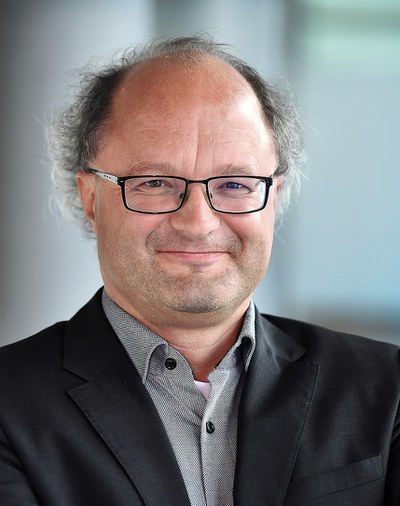
Prof. Dr. Peter Wasserscheid
Director and Head of Research Department Chemical Hydrogen Storage
Room T3.94