Master’s Thesis: Experimental Investigation of LOHC-Based Hydrogen Flows in Ceramic Fuel Cells (SOFC)
Location: Helmholtz Institute Erlangen-Nuremberg for Renewable Energies (HI ERN) - Cauerstraße 1, 91058 Erlangen
Start Date: August 2026
Duration: 6 months
About
Hydrogen is considered a key component of future sustainable energy systems. However, one of the greatest challenges remains its safe and efficient storage and transport. Liquid organic hydrogen carriers (LOHC) offer a promising solution to this problem, as hydrogen is chemically bound within a liquid carrier substance and can be handled using existing infrastructure.
The release of hydrogen from the LOHC, however, requires significant amounts of thermal energy (approximately 30% of the heating value of the released hydrogen). An innovative approach to increase efficiency involves directly coupling LOHC dehydrogenation with ceramic fuel cells (Solid Oxide Fuel Cells, SOFCs). The waste heat generated in this process can be used to release hydrogen. At the same time, SOFCs are significantly more tolerant of organic compounds in the fuel gas than other fuel cell technologies, eliminating the need for complex hydrogen purification.
Objective of the thesis
The focus is on the experimental investigation of a ceramic fuel cell with a LOHC-loaded fuel stream. The goal is to systematically analyze how key performance metrics depend on relevant process parameters. These include, among others: temperature, fuel and air utilization, and LOHC loading. Based on a structured parameter study, measures will be identified to specifically improve the power density and service life of the fuel cell.
Your tasks
Experimental work (approx. 60–70%)
- Conducting and documenting structured test series on the fuel cell test bench
- Optimizing operating conditions
- Operating and monitoring measurement and analysis equipment
Data evaluation and scientific analysis (approx. 30–40%)
- Evaluation and interpretation of polarization curves and, if necessary, electrochemical impedance spectra (EIS)
- Systematic data analysis and visualization
- Evaluation of results and derivation of technical optimization measures
A basic experimental plan will be provided. Your own ideas, critical thinking, and scientific initiative are highly welcome.
Your Profile
- Master’s degree in chemical engineering, process engineering, energy engineering, or a comparable field
- Good to very good knowledge of fuel cells and electrolyzers (e.g., gained through the course “Fuel Cells and Electrolyzers”)
- Solid knowledge of chemical reaction engineering (e.g., reaction kinetics, mass transfer phenomena)
- Practical laboratory experience
- Independent, structured, and analytical approach to work
- Very good German or English skills
- Experience with electrochemical measurement methods, particularly EIS, is a plus
Interested?
Would you like to work on a scientifically challenging research question and actively contribute to the development of future hydrogen technologies?
Then please send your application, including your resume and a current transcript, via email to ma.meyer@fz-juelich.de.
If you have any questions or comments, feel free to contact us by email at any time.
We look forward to receiving your application and getting to know you!
Contact

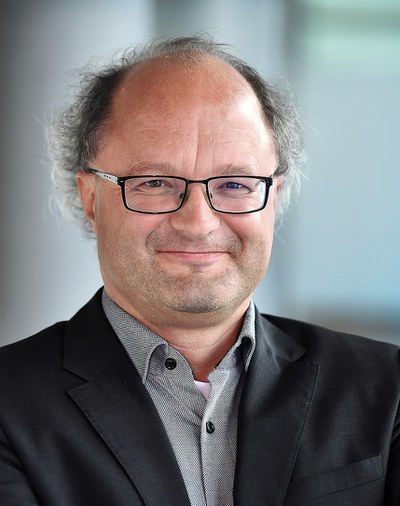
Prof. Dr. Peter Wasserscheid
Director and Head of Research Department Chemical Hydrogen Storage
Room T3.94