
Research department
Chemical Hydrogen Storage
The research department deals with new chemical hydrogen storage technologies, associated catalytic processes and material technologies.
09 July 2026
The focus is on a key challenge of the energy transition – storing hydrogen efficiently. One promising technology is LOHCs (Liquid Organic Hydrogen Carriers), which can chemically bind hydrogen and store it in liquid form. This is a major advantage for transportation and infrastructure. However, charging and discharging usually requires high temperatures and the use of expensive precious-metal catalysts.
This is where the bio-inspired approach comes in: In nature, enzymes known as hydrogenases carry out the conversion of hydrogen under mild conditions. The article shows which of these principles can be applied to technical systems to make hydrogen storage more efficient, longer-lasting, and more sustainable.

"Biological catalysts show us how hydrogen can be converted highly selectively under mild conditions. These natural design principles could pave the way for a new generation of bio-inspired LOHC systems. “In the future, we would like to evaluate such concepts using H2-converting biocatalysts and harness them for sustainable hydrogen technologies."
"LOHC technologies are particularly interesting because they store hydrogen in an easily manageable liquid form and can therefore make use of existing storage and transportation infrastructure. The bio-inspired approach taken in this work provides important insights for making future LOHC systems even milder, more selective, and longer-lasting."
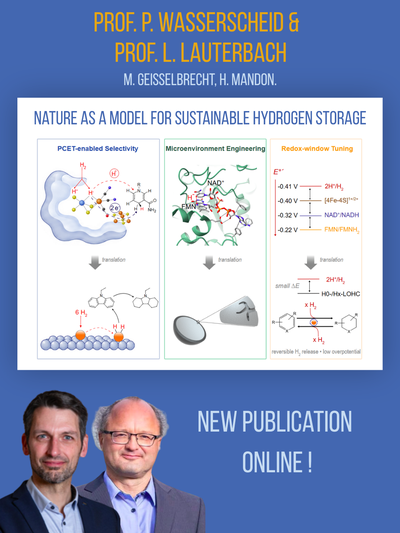
The article identifies four key strategies for further development. These include the targeted design of the catalyst environment, the use of electron carriers, the coupling of proton and electron transport, and multistep reaction concepts. The goal is to reduce the high temperatures currently required and to increase the efficiency of the systems.
The work was conducted as part of the catalaix collaborative project, which combines two complementary research areas: The biocatalytic hydrogen conversion in Lars Lauterbach’s research group and the development of chemical LOHC systems in Peter Wasserscheid’s research group at HI ERN. This combination makes it possible to systematically integrate biological and technical approaches.
The publication showcases a conceptual framework for the next generation of catalysts and carrier molecules that combine chemical robustness with biologically inspired precision. It opens up new perspectives for hydrogen storage systems that could operate more efficiently, selectively, and sustainably.
M. Geißelbrecht, H. Mandon, P. Wasserscheid, L. Lauterbach: Bio Inspired Design Principles for Next Generation Liquid Organic Hydrogen Carriers: Bridging Molecular Biocatalysis and Chemical Hydrogen Storage. Renewable and Sustainable Energy Reviews, accepted for publication. https://doi.org/10.1016/j.rser.2026.117216
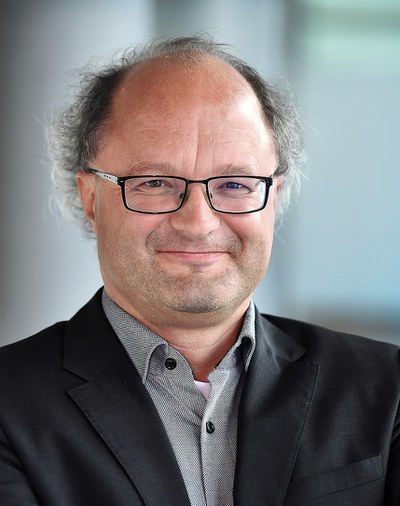
Director and Head of Research Department Chemical Hydrogen Storage